UPSC Current Affairs
FUEL PRICES INCREASED
Background India is currently facing an energy and economic challenge because of the ongoing conflict in West Asia (Middle East). Rising tensions in the region have pushed up international crude oil prices, making fuel imports expensive for India. Since India imports most of its crude oil from other countries, any rise in global oil prices directly affects India’s economy.
VRAuthor Desk
3 min read
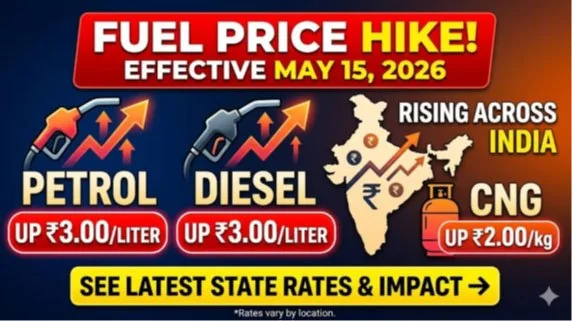
Background India is currently facing an energy and economic challenge because of the ongoing conflict in West Asia (Middle East). Rising tensions in the region have pushed up international crude oil prices, making fuel imports expensive for India. Since India imports most of its crude oil from other countries, any rise in global oil prices directly affects India’s economy.
Background
- India is currently facing an energy and economic challenge because of the ongoing conflict in West Asia (Middle East).
- Rising tensions in the region have pushed up international crude oil prices, making fuel imports expensive for India.
- Since India imports most of its crude oil from other countries, any rise in global oil prices directly affects India’s economy.
WHY THE PRICES INCREASED?
(a) Rising International Crude Oil Prices
- Because of the war in West Asia, global crude oil became expensive.
- India imports large quantities of oil, so the government and oil companies had to pay more money to buy fuel from abroad.
(b) Heavy Losses for Oil Companies
Government-owned oil companies were
selling petrol and diesel at old prices even though buying costs had increased.
As a result:
- They were reportedly losing around ₹1,600 crore every day
- Earlier low-cost fuel stock had finished
- Losses became larger in April and May. So, the government finally allowed fuel prices to rise.
(c) Saving Foreign Exchange
- India pays for imported oil in foreign currency, mainly US dollars.
When oil prices rise:
- More dollars are needed
- Pressure increases on India’s foreign exchange reserves
- The rupee can weaken
So the government wants people to reduce unnecessary fuel use.
PM MODI’S APPEAL TO CITIZENS
Before the price hike, Prime Minister Narendra Modi appealed to people to:
- Prefer work from home (WFH)
- Attend online classes
- Avoid unnecessary travel
- Delay gold purchases
- Avoid foreign trips for one year
Main Goal:
To save:
- Fuel
- Foreign exchange reserves
- Import costs
PUBLIC REACTION
The PM’s appeal created fear among many people that fuel shortages might happen.
As a result:
- Long queues formed outside petrol pumps
- Panic buying was reported in:
- Delhi-NCR
- Uttar Pradesh
- Gujarat
- Bihar
- Rajasthan
- Odisha
Later, Petroleum Minister Hardeep Singh Puri clarified that India has enough fuel reserves and there is no shortage.
THREE OTHER MAJOR ACTIONS
(1) Increase in Gold Import Duty
The government increased import duty on:
- Gold
- Silver
- Platinum
- Jewellery-related imports
New Effective Gold Import Duty: 15%
Why?
To:
- Reduce non-essential imports
- Save foreign exchange
- Control the trade deficit
Since India imports large amounts of gold, reducing imports can save dollars.
(2) Milk Prices Increased
Major milk brands:
increased milk prices by ₹1–₹5.
Reason:
- Rising production and transport costs
- Higher fuel expenses
This directly affects household budgets.
(3) Sugar Export Ban Till September
India banned export of:
- Raw sugar
- White sugar
- Refined sugar
Reasons:
- Fear of lower production due to El Niño
- Global uncertainty because of the Iran-related conflict
- Falling domestic sugar stocks
Aim:
- To ensure enough sugar remains available inside India and prices stay under control.
WHAT COULD HAPPEN NEXT?
Reports suggest the government may also:
- Reduce taxes for foreign investors investing in Indian bonds
Why?
To:
- Attract foreign money into India
- Support the rupee
- Improve economic stability
However, no final decision has been announced yet.
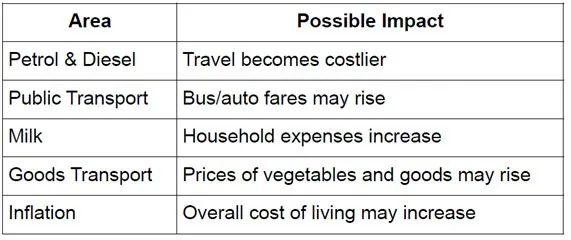
IMPACT ON COMMON PEOPLE
- Prelims: Key facts, institutions, locations and terminology in the article.
- Mains: Connect the topic with Economy, International Relations, Polity & Governance.
- Revision: Use the article headings to prepare concise notes and answer-writing points.
Test your understanding
Questions from this article
Prelims practiceWith reference to FUEL PRICES INCREASED, consider the following statements:
- India is currently facing an energy and economic challenge because of the ongoing conflict in West Asia (Middle East).
- Rising tensions in the region have pushed up international crude oil prices, making fuel imports expensive for India.
- Since India imports most of its crude oil from other countries, any rise in global oil prices directly affects India’s economy.
Which of the statements given above are correct?
- 1 and 2 only
- 2 and 3 only
- 1 and 3 only
- 1, 2 and 3
View answer
Answer: (d) 1, 2 and 3. All three statements are drawn from the article.
Mains practiceDiscuss the background, key issues and significance of FUEL PRICES INCREASED for India.
Answer in 250 words.
View answer approach
- WHY THE PRICES INCREASED?
- As a result:
- When oil prices rise:
- As a result:
- THREE OTHER MAJOR ACTIONS
Frequently asked questionsFrequently asked questions
Why is Fuel Prices Increased in the news?
Background India is currently facing an energy and economic challenge because of the ongoing conflict in West Asia (Middle East). Rising tensions in the region have pushed up international crude oil prices, making fuel imports expensive for India.
What are the key facts about Fuel Prices Increased?
Since India imports most of its crude oil from other countries, any rise in global oil prices directly affects India’s economy. (a) Rising International Crude Oil Prices Because of the war in West Asia, global crude oil became expensive. India imports large quantities of oil, so the government and oil companies had to pay more money to buy fuel from abroad.
Why is Fuel Prices Increased important for UPSC preparation?
The topic connects current developments with Economy, International Relations, Polity & Governance and is relevant for both objective revision and analytical answer writing.