UPSC Current Affairs
ECONOMIC ADVISORY COUNCIL TO THE PM
On 6 June 2026, Prime Minister Narendra Modi chaired a meeting of the Economic Advisory Council to the Prime Minister (EAC-PM) to discuss measures for sustaining India's economic growth amid global uncertainties. FOCUS OF THE MEETING Sustaining high economic growth. Assessing risks from the West Asia conflict.
VRAuthor Desk
3 min read
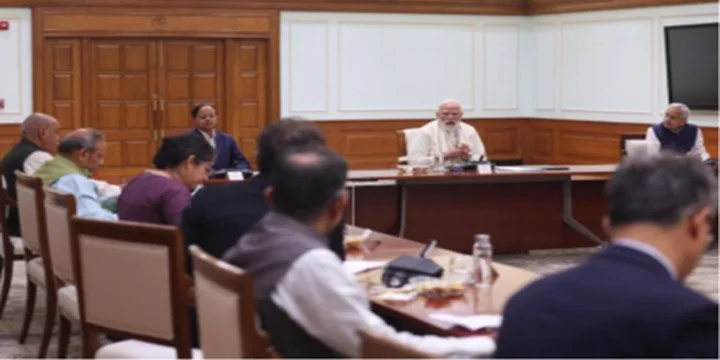
On 6 June 2026, Prime Minister Narendra Modi chaired a meeting of the Economic Advisory Council to the Prime Minister (EAC-PM) to discuss measures for sustaining India's economic growth amid global uncertainties. FOCUS OF THE MEETING Sustaining high economic growth. Assessing risks from the West Asia conflict.
Why in News?
On
6 June 2026, Prime Minister
Narendra Modi chaired a meeting of the
Economic Advisory Council to the Prime Minister (EAC-PM) to discuss measures for sustaining India's economic growth amid global uncertainties.
FOCUS OF THE MEETING
- Sustaining high economic growth.
- Attracting foreign capital.
- Strengthening structural reforms.
- Assessing risks from the West Asia conflict.
- Addressing challenges posed by El Niño.
- Improving Ease of Doing Business (EoDB) and Ease of Living.
WHAT IS EAC-PM
- The Economic Advisory Council to the Prime Minister (EAC-PM) is an independent advisory body that provides economic advice to the Prime Minister on key policy issues.
Nature of EAC-PM
- Non-Constitutional Body
- Non-Statutory Body
- Non-Permanent Body
- Constituted through an Executive Order
Present Chairman
FUNCTIONS
The Council performs the following functions:
Economic Policy Advice
- Advises the Prime Minister on economic matters.
- Suggests policy interventions.
Macroeconomic Assessment
- Reviews growth trends.
- Assesses inflation, investment and employment conditions.
Risk Evaluation
- Studies domestic and global economic risks.
- Suggests mitigation measures.
Reform Recommendations
- Recommends reforms for sustainable and inclusive growth.
Development Planning
- Provides inputs regarding long-term development priorities.
MAJOR ISSUES DISCUSSED
1. Sustaining India's Growth Momentum
The Council emphasized maintaining India's growth trajectory despite global challenges.
Areas of Focus
- Economic Transformation
- Structural Reforms
- Investment-led Growth
- Macroeconomic Stability
- Ease of Doing Business
- Ease of Living
Objective
- To ensure that India remains one of the fastest-growing major economies despite global uncertainty.
2. Measures to Boost Foreign Capital Inflows
- The government announced several measures to attract foreign investment into India.
Tax Relief for Foreign Institutional Investors (FIIs)
Removal of Short-Term Capital Gains Tax (STCG)
- No STCG tax on investments in Government Securities.
Removal of Long-Term Capital Gains Tax (LTCG)
- LTCG tax also removed on such investments.
Removal of Withholding Tax
- Interest income from Government Securities exempted from withholding tax.
Expected Benefits
- Greater investor confidence.
- Higher foreign investment.
- Improved market liquidity.
- Lower borrowing costs.
3. RBI Measures to Support Capital Inflows
- The Reserve Bank of India (RBI) introduced complementary measures.
Easier Foreign Currency Deposits
- Relaxation of norms for mobilising foreign currency deposits.
Revival of FCNR(B) Scheme
- FCNR(B) = Foreign Currency Non-Resident (Bank) Deposit Scheme
Under this scheme:
- NRIs can maintain foreign currency deposits.
- RBI bears exchange-rate hedging costs.
Forex Swap Facility for PSUs
Provided temporary concessional forex swap facility for:
- Public Sector Undertakings (PSUs)
- Raising External Commercial Borrowings (ECBs)
Potential Foreign Capital Inflows
Estimated Inflows
- The combined impact of government and RBI measures may attract Nearly $70 Billion of foreign capital inflows.
ROLE OF GLOBAL BOND INDICES
Why Bond Index Inclusion Matters?
When a country is included in major bond indices:
- Global funds automatically invest.
- Demand for government bonds increases.
- Bond yields fall.
- Borrowing costs decline.
INDIA’S RECENT INCLUSION IN GLOBAL BOND INDICES
| Bond Index |
Inclusion Date |
| JPMorgan Emerging Market Bond Index |
June 2024 |
| Bloomberg Emerging Market Local Currency Index |
January 2025 |
| FTSE Russell Emerging Market Bond Index |
September 2025 |
BLOOMBERG GLOBAL AGGREGATE BOND INDEX
Significance
India's inclusion could bring:
- $20–25 Billion additional inflows.
- Greater demand for Government Securities.
- Lower borrowing costs.
- Deeper integration with global financial markets.
ASSESSMENT OF GLOBAL RISKS
1. West Asia Conflict
The Council reviewed the implications of the ongoing conflict in West Asia.
Key Concerns
- Energy security.
- Crude oil prices.
- Global trade routes.
- Financial market stability.
Assessment
- No major immediate threat was identified, but developments continue to be monitored.
2. El Niño and Monsoon Risks
Why Important?
- El Niño can weaken India's monsoon.
Possible Impact
- Lower agricultural output.
- Reduced rural incomes.
- Food inflation.
- Slower economic growth.
- Prelims: Key facts, institutions, locations and terminology in the article.
- Mains: Connect the topic with Economy, International Relations, Polity & Governance.
- Revision: Use the article headings to prepare concise notes and answer-writing points.
Test your understanding
Questions from this article
Prelims practiceWith reference to ECONOMIC ADVISORY COUNCIL TO THE PM, consider the following statements:
- Sustaining high economic growth.
- Attracting foreign capital.
- Strengthening structural reforms.
Which of the statements given above are correct?
- 1 and 2 only
- 2 and 3 only
- 1 and 3 only
- 1, 2 and 3
View answer
Answer: (d) 1, 2 and 3. All three statements are drawn from the article.
Mains practiceDiscuss the background, key issues and significance of ECONOMIC ADVISORY COUNCIL TO THE PM for India.
Answer in 250 words.
View answer approach
- FOCUS OF THE MEETING
- WHAT IS EAC-PM
- MAJOR ISSUES DISCUSSED
- ROLE OF GLOBAL BOND INDICES
- INDIA’S RECENT INCLUSION IN GLOBAL BOND INDICES
Frequently asked questionsFrequently asked questions
Why is Economic Advisory Council To The Pm in the news?
On 6 June 2026, Prime Minister Narendra Modi chaired a meeting of the Economic Advisory Council to the Prime Minister (EAC-PM) to discuss measures for sustaining India's economic growth amid global uncertainties. FOCUS OF THE MEETING Sustaining high economic growth.
What are the key facts about Economic Advisory Council To The Pm?
Assessing risks from the West Asia conflict. Addressing challenges posed by El Niño. Improving Ease of Doing Business (EoDB) and Ease of Living.
Why is Economic Advisory Council To The Pm important for UPSC preparation?
The topic connects current developments with Economy, International Relations, Polity & Governance and is relevant for both objective revision and analytical answer writing.