What is E 20 fuel?
E20 fuel is a
blended gasoline containing
20% ethanol and
80% petrol, designed to reduce greenhouse gas emissions and lower dependence on fossil fuels.
Mandated for nationwide rollout in India by
April 1, 2026, it offers a higher octane rating (95 RON) for better performance but
may reduce fuel efficiency by 1–10% compared to E10.
KEY DETAILS
- Composition: 20% Ethanol (biofuel) + 80% Petrol (Gasoline).
- Performance: Higher 95 RON rating provides better combustion, though ethanol's lower energy density can decrease fuel efficiency by 5–10%.
- Environmental Impact: Lower emissions of Greenhouse Gases (GHGs) compared to traditional petrol.
- Engine Impact: Requires specific materials to handle the higher ethanol concentration, which is more corrosive to rubber and plastic parts in older vehicles.
- Compatibility: Most new vehicles are designed to run on E20, whereas older vehicles may experience issues with fuel consumption and component longevity.
PROS & CONS
- Pros: Lower carbon emissions, higher octane rating (95 RON), better for the environment, reduced oil imports, and lower price potential.
- Cons: Reduced mileage (5–10% drop), lower energy density, potential for engine damage in older vehicles, and reduced performance in cold weather.
COMPATIBILITY
- Newer Vehicles: Cars and two-wheelers manufactured after April 2023 are designed to be fully E20-compliant and should experience no issues.
- Older Vehicles: While many older vehicles can run on E20 without immediate failure, long-term use in non-compliant engines may cause corrosion of rubber seals, gaskets, and fuel lines.
- Warranty: For newer cars (post-2020/2023), using E20 fuel will not void your warranty. However, some manufacturers like Toyota have warned that using it in older, non-compatible models could impact warranty coverage.
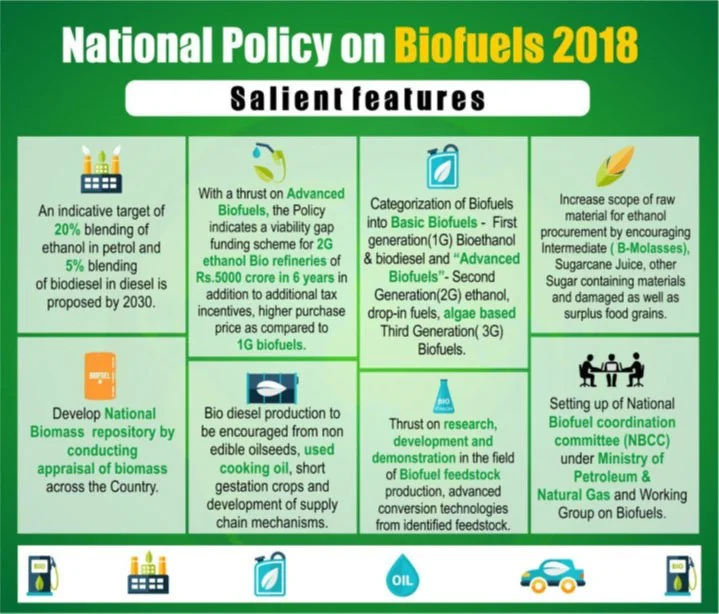
NATIONAL POLICY ON BIOFUELS
The Cabinet approved amendments to the
National Policy on Biofuels, 2018 to advance the target of
20% ethanol blending in petrol (E20) to year
2025-26 from earlier
2030.
WHAT ARE BIOFUELS?
Biofuels refers to l
iquid transportation fuels, such as
ethanol and biodiesel, derived from agricultural produce, forests or any other organic material (feedstock).
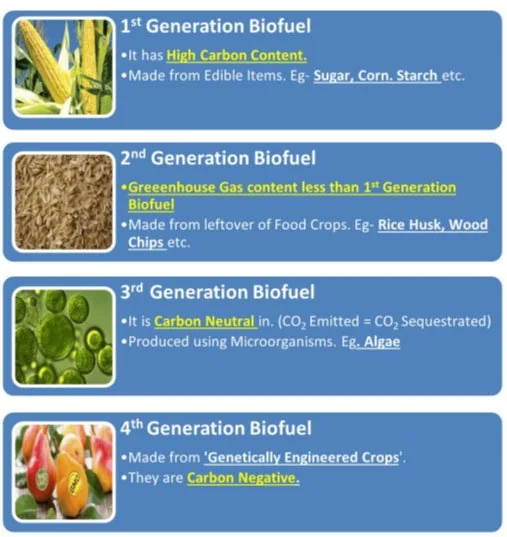
GENERATIONS OF BIOFUELS
Based on the feedstock (raw materials) used to produce biofuels, they are classified into
four generations (see image).
Presently, first-generation biofuels are the main source of biofuels globally.
NATIONAL POLICY OF BIOFUELS, 2018 (FEATURES)
SIGNIFICANCE OF ETHANOL BLENDING
• Reduce dependency on Petroleum:
By blending ethanol into gasoline, it can reduce the amount of petrol required to run a car, thereby
reducing dependence on imported, expensive, and polluting petroleum.
Today, India imports 85% of its oil requirements.
• Save Money:
India's net import of petroleum was 185 million tonnes in 2020-21 at a cost of USD551 billion.
Most of the petroleum products are used in transportation and therefore, the E20 programme can save the country USD4 billion annually.
• Less Polluting:
Ethanol is a less polluting fuel and offers equivalent efficiency at a lower cost than petrol.
RELATED ISSUES WITH BIOFUELS
• Risk of Hunger:
The food grains meant for the impoverished are being sold to distilleries at prices cheaper than what states pay for their public distribution networks.
• Cost:
Production of biofuels requires land, this impacts the cost of biofuels as well as that of food crops.
• Water use:
Massive quantities of water are required for proper irrigation of biofuel crops as well as to manufacture the fuel, which could strain local and regional water resources.
Test your understanding
Questions from this article
Prelims practiceWith reference to E 20 FUEL, consider the following statements:
- Composition: 20% Ethanol (biofuel) + 80% Petrol (Gasoline).
- Performance: Higher 95 RON rating provides better combustion, though ethanol's lower energy density can decrease fuel efficiency by 5–10%.
- Environmental Impact: Lower emissions of Greenhouse Gases (GHGs) compared to traditional petrol.
Which of the statements given above are correct?
- 1 and 2 only
- 2 and 3 only
- 1 and 3 only
- 1, 2 and 3
View answer
Answer: (d) 1, 2 and 3. All three statements are drawn from the article.
Mains practiceDiscuss the background, key issues and significance of E 20 FUEL for India.
Answer in 250 words.
View answer approach
- KEY DETAILS
- PROS & CONS
- COMPATIBILITY
- 2030.
- NATIONAL POLICY OF BIOFUELS, 2018 (FEATURES)
Frequently asked questionsFrequently asked questions
Why is E 20 Fuel in the news?
E20 fuel is a blended gasoline containing 20% ethanol and 80% petrol, designed to reduce greenhouse gas emissions and lower dependence on fossil fuels. Mandated for nationwide rollout in India by April 1, 2026, it offers a higher octane rating (95 RON) for better performance but may reduce fuel efficiency by 1–10% compared to E10.
What are the key facts about E 20 Fuel?
KEY DETAILS Composition: 20% Ethanol (biofuel) + 80% Petrol (Gasoline). Performance: Higher 95 RON rating provides better combustion, though ethanol's lower energy density can decrease fuel efficiency by 5–10%. Environmental Impact: Lower emissions of Greenhouse Gases (GHGs) compared to traditional petrol.
Why is E 20 Fuel important for UPSC preparation?
The topic connects current developments with Environment, Economy, Polity & Governance and is relevant for both objective revision and analytical answer writing.